
Navigare nel Meltemi: modelli di vento e rotte più sicure nell'Egeo
Huseyin Uçkun - Meltemi Wind Turchia: Guida del capitano per una navigazione estiva sicura | Diario del capitano YachttoGO: Cosa serve per... Per saperne di più

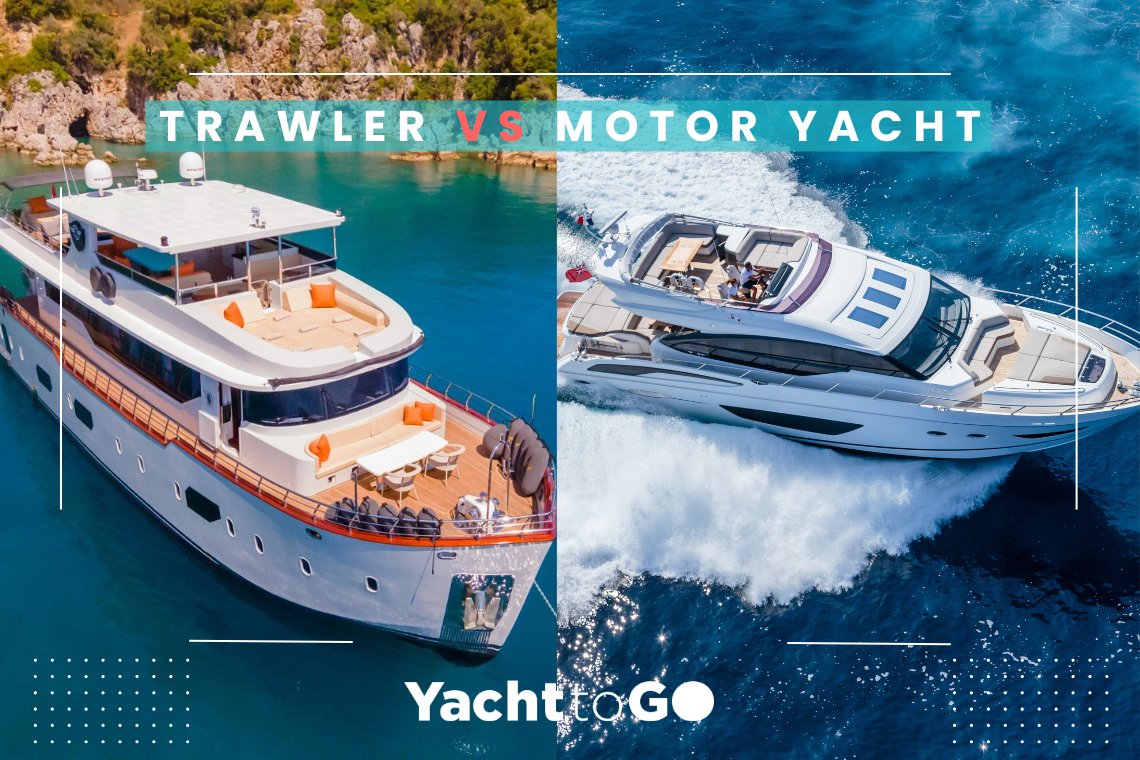
“Capitano, voglio andare veloce, ma mi rifiuto di pagare $3.000 al giorno solo per il diesel”. Lo sento dire ogni martedì. Gli ospiti guardano un'elegante barca di 80 piedi e immaginano di volare sull'acqua. Poi guardano il preventivo dell'Advanced Provisioning Allowance (A.P.A.) per il carburante e i loro occhi si allargano. Non si può imbrogliare l'oceano. Se si vuole la velocità, si paga alla pompa. Se si desidera autonomia e stabilità, si scambia la velocità massima con uno scafo pesante e profondo. La scelta tra un peschereccio e uno yacht a motore standard cambia l'intera vacanza. Vi spiego come le forme dello scafo, i blocchi motore e gli stabilizzatori determinano il vostro tempo in acqua.
Se avete intenzione di attraversare il tratto aperto e ventoso vicino a Capo Kurdoğlu, il pesante scafo dislocante di un peschereccio vi salverà la colazione. Se invece volete solo sfrecciare dal porto turistico di Göcek all'isola di Yassıca prima del tramonto, lo yacht a motore vince.
L'acqua è densa. Per attraversarla, un'imbarcazione deve spingere l'acqua fuori dal suo percorso o salirci sopra. Questa è la differenza fondamentale tra queste due imbarcazioni. Un peschereccio utilizza un scafo dislocante. Si trova in profondità nell'acqua. La sua prua è affilata. Taglia nettamente le onde. Non cerca mai di sollevarsi dall'acqua. Per questo motivo, richiede pochissimi cavalli per mantenere una velocità costante di 10 nodi.
Uno yacht a motore standard utilizza un scafo planante. A bassa velocità spinge l'acqua come un peschereccio, ma in modo molto inefficiente. Quando il capitano spinge la manetta in avanti, i motori gemelli ruggiscono. La forza pura e semplice solleva la prua in aria. La barca supera la sua stessa onda di prua e si appiattisce, cavalcando l'acqua. Questo permette di raggiungere velocità di 20-30 nodi. Ma l'energia necessaria per ottenere questa portanza è enorme. Se state sfogliando il nostro noleggio di yacht a motore opzioni nella nostra flotta globale verificata, è necessario comprendere questa realtà fisica.
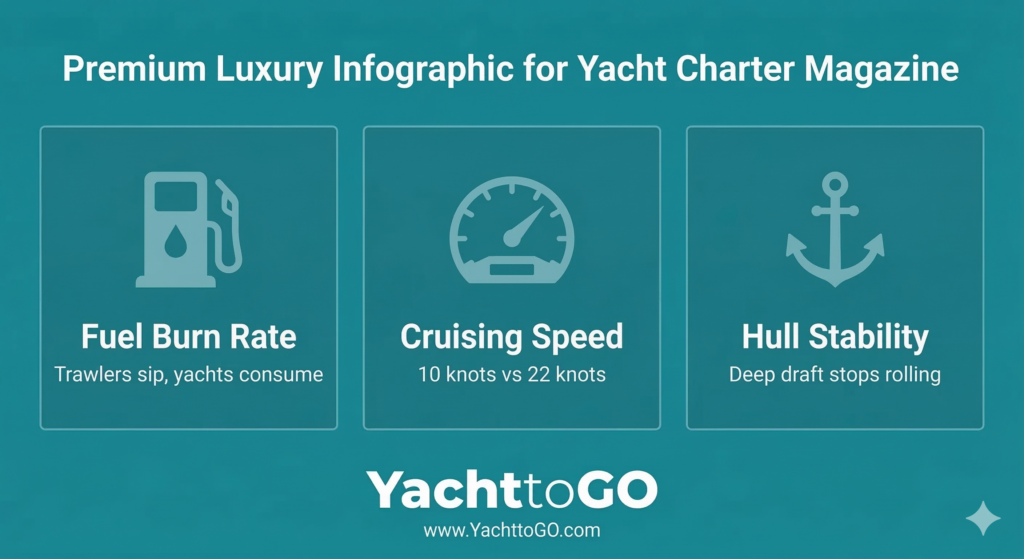
Vediamo la sala macchine. È qui che si spende il budget. Un moderno peschereccio a strascico si affida spesso a motori altamente efficienti e a basso numero di giri. Pensate a un solido Motore marino Volvo Penta o un singolo blocco commerciale per impieghi gravosi. Navigando a 10 nodi, un peschereccio di 70 piedi può bruciare circa 40-60 litri di gasolio all'ora. Il carburante viene consumato pochissimo. L'autonomia di crociera è enorme. Si possono riempire i serbatoi a Marmaris e non pensare al carburante per due settimane.
Ora guardate un elegante yacht planante di 70 piedi. Per raggiungere i 22 nodi, ha bisogno di una grande potenza. Probabilmente monterà due motori V12 gemelli, spesso di produttori come MTU. Quando i turbocompressori entrano in funzione e la barca si alza in volo, il consumo di carburante sale alle stelle. A 22 nodi, la barca potrebbe bruciare da 350 a 450 litri all'ora. Il calcolo è semplice. Un'ora di funzionamento costa circa dieci volte di più di un peschereccio. Se si vuole la velocità, si compra il diesel. Non giudico mai la scelta, ma insisto che gli ospiti conoscano i numeri prima di salire a bordo.
Il Mar Egeo non si cura del vostro itinerario. I venti pomeridiani del Meltemi solleveranno onde ripide e taglienti. Il modo in cui l'imbarcazione affronta questo chop definisce il vostro comfort. Un peschereccio pesante, con il suo pescaggio profondo e il baricentro basso, si comporta come un pendolo. Si muove in modo rettilineo. La prua affilata taglia le onde. Il movimento è costante e prevedibile. I piatti rimangono sul tavolo. Si può camminare sul ponte senza afferrare i corrimano.
Uno yacht a motore planante è più leggero. Lo scafo è più piatto a poppa per consentire di sfiorare la superficie. Quando si colpisce un chop di 1,5 metri a 20 nodi con uno scafo planante, si sente l'impatto. La barca sbatte contro gli avvallamenti. Le vibrazioni scuotono le paratie interne. Si sente la fibra di vetro flettersi. Un capitano intelligente riduce la velocità a 10 nodi per salvare la barca e lo stomaco degli ospiti. Ma ricordate che uno scafo planante è altamente inefficiente alle basse velocità. Tende a sbandare e a rollare più di un trawler quando è costretto ad andare piano.
La vera prova di comfort avviene di notte. Si getta l'ancora in una baia. Una mareggiata arriva da un traghetto di passaggio. La barca inizia a oscillare da un lato all'altro. Questo è il rollio dell'ancora. Poiché un peschereccio ha uno scafo più rotondo e profondo, a volte può rollare di più all'ancora rispetto a uno yacht a motore a fondo piatto. Tuttavia, la tecnologia marina ha risolto questo problema.
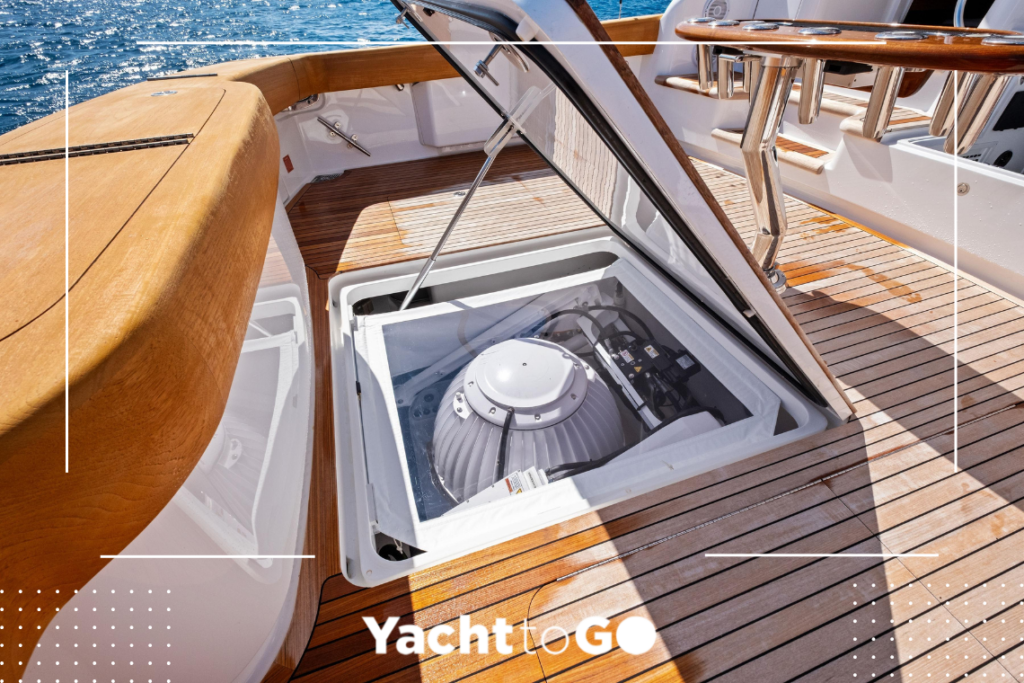
Quando si controlla il nostro noleggio di pescherecci flotta, cercare la parola “stabilizzatori”. In particolare, gli stabilizzatori giroscopici a velocità zero, come quelli prodotti da Guardiano del mare. Queste massicce sfere rotanti si trovano in profondità nello scafo. Combattono la fisica dell'onda. Un peschereccio stabilizzato è completamente piatto in un ancoraggio a rollio. Dormite sonni tranquilli. Il caffè rimane nella tazza. Anche gli yacht a motore ne sono dotati, ma aggiungono peso. Se date la priorità al comfort rispetto alla velocità pura, insistete per un'imbarcazione stabilizzata.
Il comfort degli ospiti non riguarda solo il movimento. È una questione di rumore. Quando due motori gemelli da 1.500 cavalli si accendono sotto il ponte principale di un veloce yacht a motore, si sente il ronzio attraverso le piante dei piedi. La nota di scarico è forte. Anche con un eccellente isolamento acustico, si sa di essere su una macchina veloce. La sensazione è di aggressività. Per alcuni, questo è il brivido. Per altri, dopo quattro ore è estenuante.
La sala macchine di un peschereccio è un ambiente diverso. I motori funzionano a un numero di giri inferiore. I costruttori utilizzano pesanti e spessi strati di schiuma acustica e isolamento in piombo. Quando un moderno trawler naviga a 10 nodi, spesso si sente solo lo spruzzo dell'acqua contro la prua. Il basso e costante rumore dei motori diesel singoli o gemelli diventa un rumore di fondo. È un modo di viaggiare più tranquillo e silenzioso.
La barca deve corrispondere alla mappa. Se volete esplorare il Golfo di Hisarönü, da Datça fino a Bozburun, avete a che fare con specchi d'acqua aperti e forti venti pomeridiani. Le distanze tra le baie isolate sono più lunghe. Questo è il territorio dei pescherecci. Si imposta il pilota automatico a 10 nodi, ci si siede sul flybridge e si lascia che il pesante scafo faccia il suo lavoro. L'ampio raggio di crociera consente di non sprecare mezza giornata per fare rifornimento.
Al contrario, guardate il Flotta Göcek itinerari. La baia di Fethiye è ricca di isole situate a due o tre miglia l'una dall'altra. L'acqua è generalmente protetta. Qui, uno yacht a motore veloce ha senso. Ci si può svegliare in una baia, accendere i motori, raggiungere in 15 minuti un beach club per il pranzo e poi correre verso un'altra baia per la cena. La rapidità del bay-hopping giustifica lo scafo planante. Il tempo effettivo trascorso in navigazione è minimo, quindi l'elevato consumo di carburante per ora è meno importante per il budget totale di A.P.A..
Dico a tutti i clienti la stessa cosa. Non noleggiate un trawler se siete impazienti. Non noleggiate uno yacht a motore planante se odiate i motori rumorosi e le spese di carburante elevate. Un trawler è una casa oceanica. È costruito per la resistenza, la stabilità e il volume. Uno yacht a motore è un'auto sportiva. È costruito per l'impatto, la velocità e i tempi stretti. Esaminate i fatti, controllate il vostro budget per il diesel e prenotate la barca che corrisponde alla vostra realtà. Il mare non scende a compromessi, e nemmeno la vostra scelta di imbarcazione dovrebbe farlo.
Esplorate il lusso del noleggio di yacht a motore: Portate la vostra vacanza al livello successivo
| Caratteristica / Opzione | Differenza chiave | Impatto del comfort | Realtà dei costi |
|---|---|---|---|
| Velocità di crociera | Trawler: 10-12 nodi. Yacht a motore: 18-24 nodi. | I pescherecci offrono un transito lento e costante. Gli yacht offrono un transito rapido. | Il tempo è denaro. La velocità aumenta drasticamente i costi di carburante dell'A.P.A.. |
| Dinamica dello scafo | Dislocazione (taglio dell'acqua) vs. planata (passaggio sull'acqua). | I pescherecci gestiscono meglio le onde agitate. Gli yacht sbattono contro le onde ripide. | La piallatura richiede una grande potenza, il che significa motori più grandi e più assetati. |
| Consumo medio di carburante | Peschereccio: 40-70 L/ora. Yacht a motore: 250-450 L/h. | Rumore del motore ridotto su un peschereccio. Vibrazioni elevate su uno yacht veloce. | Una crociera di 4 ore su uno yacht costa quasi 10 volte di più in gasolio. |
| Volume e spazio | I trawler portano il baglio molto in avanti. Gli yacht sono eleganti e affusolati. | I trawler sembrano ampi appartamenti. Gli yacht sembrano jet di lusso. | Incluso nella tariffa base di noleggio, ma i pescherecci offrono più spazio per metro. |
Scegliere un Yacht A VAI dove vuoi tu! Collegatevi direttamente con i proprietari di yacht verificati della nostra flotta globale.
O lasciare che il nostro Master Broker gestire ogni dettaglio. Trovare l'abbinamento perfetto non dovrebbe essere un peso. Selezionate di seguito il livello di servizio che preferite per una fuga in mare senza interruzioni, sicura e protetta.
Per la disponibilità della flotta, le procedure di prenotazione standard e le informazioni generali sugli itinerari.
Sì. I trawler hanno uno scafo dislocante. Ciò significa che si trovano in profondità nell'acqua e tagliano le onde invece di rimbalzarci sopra. Offrono un'andatura molto più stabile e prevedibile in condizioni di vento forte o di mareggiate, rendendoli ideali per le zone con forti venti trasversali.
Il risparmio è enorme. Uno yacht a motore veloce che viaggia a 22 nodi può facilmente bruciare dai 300 ai 400 litri di gasolio all'ora. Un peschereccio di dimensioni simili che viaggia a 10 nodi brucia circa 40-60 litri all'ora. Se si naviga per 3 ore al giorno nell'arco di una settimana, un peschereccio a strascico riduce drasticamente i costi finali di carburante A.P.A..
Gli stabilizzatori giroscopici, come quelli prodotti da Seakeeper, sono unità rotanti all'interno dello scafo che eliminano il rollio laterale della barca. Se siete inclini al mal di mare o se semplicemente odiate che il caffè si rovesci quando un'altra imbarcazione passa davanti al vostro ancoraggio, dovete assolutamente avere una barca dotata di stabilizzatori a velocità zero.

Con radici marittime fondate nel 1994, sono un Master Mariner, un broker di yacht charter d'élite e l'amministratore delegato di YachttoGO e NOMAD Group. Con sede a Göcek, Fethiye, Turchia, sono specializzato nella cura di yacht charter di classe mondiale, aviazione ed esperienze di concierge VIP in tutto il Mediterraneo orientale. La mia visione è quella di rendere il noleggio di yacht a livello globale semplice e accessibile, elevando YachttoGO tra i primi 10 mercati marittimi del mondo. Che siate alla ricerca di uno yacht a motore VIP o di un caicco classico, io e il mio team ci dedichiamo a progettare la vostra fuga marittima definitiva.
Huseyin Uçkun - Meltemi Wind Turchia: Guida del capitano per una navigazione estiva sicura | Diario del capitano YachttoGO: Cosa serve per... Per saperne di più
Diario del capitano: Quello che c'è da sapere sul rifornimento degli yacht a noleggio 1. La regola dei 21 giorni: il vostro foglio delle preferenze deve essere... Per saperne di più
Diario del capitano: Cosa c'è da sapere sull'assicurazione per il noleggio di barche 1. La trappola del denaro: L'APA paga il carburante e il cibo.... Per saperne di più
Partecipa alla discussione