
Navigating the Meltemi: Wind Patterns and Safest Routes in the Aegean
Huseyin Uçkun · Meltemi Wind Turkey: A Captain’s Guide to Safe Summer Sailing | YachttoGO Captain’s Log: What You Need to... Read More

 by Hüseyin
I hear the same question every week: “Captain, if I pay the APA, why do they still want my credit card for a deposit?” People step onto a yacht expecting a floating hotel. But a hotel does not hit a concrete pier at three knots because the wind changed. A yacht does. When you charter a boat, you are taking temporary ownership of a multi-million dollar machine. You need to understand how the money works before you untie the lines. Let’s look at the hard facts about deposits, damage waivers, and what happens when things go wrong.
We once had a guest anchor in a rocky cove near Göcek. They dragged anchor at 2 AM, panicked, and wrapped the mooring line around the propeller. The sound of grinding fiberglass is expensive. A solid damage waiver turned a €15,000 nightmare into a €500 lesson.
Let us clear this up first. These are two completely different funds.
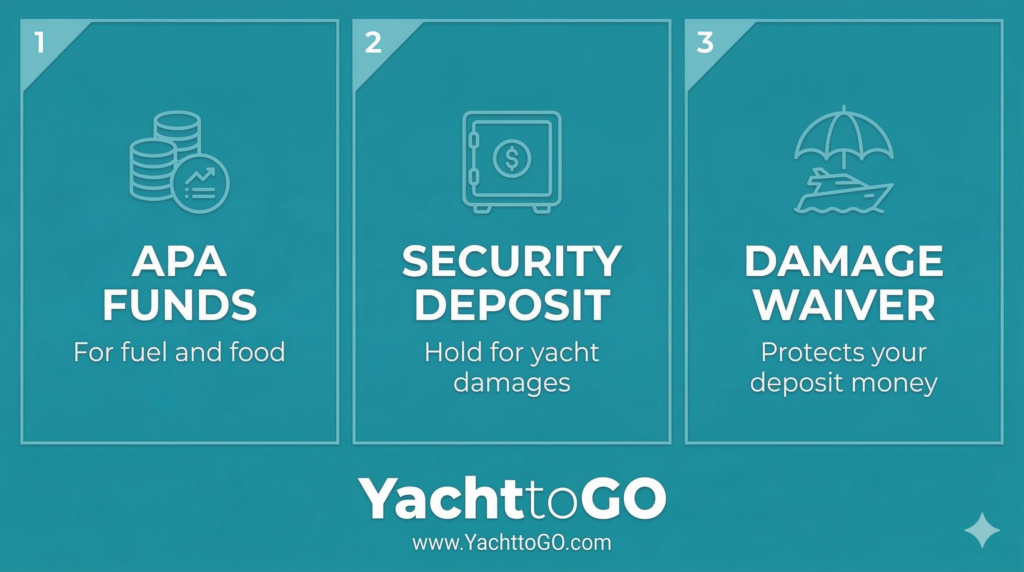
The A.P.A. (Advance Provisioning Allowance) is your operational budget. It buys the diesel that feeds the twin MTUs. It buys the fresh fish, the ice, and the port fees. It is your money. The captain keeps a ledger. At the end of the trip, you get the unspent cash back. It has absolutely nothing to do with damage.
The Security Deposit is about liability. The charter company places a hold on your credit card. This protects the owner if you break a window, burn the anchor windlass motor, or tear a sail. If you bring our verified global fleet vessel back in perfect condition, the hold is released. If you break something, the repair cost comes out of this deposit.
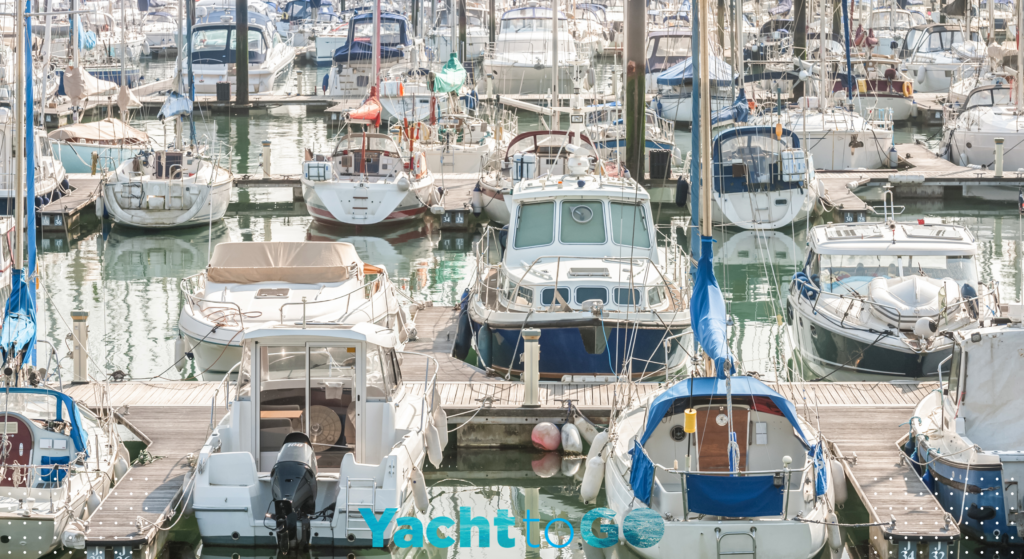
When booking a bareboat rental, you are the captain. You carry the full risk. A standard security deposit on a 45-foot catamaran can easily be €4,000 to €8,000. That is a lot of money tied up on your card while you are trying to relax.
This is where the Damage Waiver (or deposit insurance) comes in. Instead of risking €5,000, you pay a non-refundable fee—usually around €300 to €600. Sometimes, this completely waives the deposit. Other times, it reduces the deposit to a very small amount, like €500.
I always tell my clients to buy the waiver. A sudden crosswind in a tight marina can push you into a concrete dock. A minor gelcoat scratch costs €800 to fix. If you drop the outboard engine into the sea while attaching it to the dinghy, that is €1,200 gone. Buy the waiver. Sleep better.
Read the fine print. Usually, a waiver covers accidental damage to the yacht and its equipment. This includes:
Here is the hard truth. No insurance covers stupidity. In maritime law, we call this “gross negligence.” If you commit gross negligence, your damage waiver is void. You will pay the full cost of the repair, even if it exceeds your original deposit.
What is gross negligence?
Marine toilets are delicate. You pump sea water in, and waste goes into a holding tank. If you put wet wipes, feminine products, or thick paper into a marine toilet, it will block the macerator pump. A mechanic has to come, open the pipes, and clean raw sewage by hand. It ruins the boat’s smell and ruins the mechanic’s day. The charter company will charge you €300 to €600 for this. A damage waiver does not cover it.
Most charter contracts strictly forbid sailing at night. If you hit a reef at 1 AM, the insurance company will laugh at your claim. The same applies to operating the vessel under the influence of alcohol. You are entirely liable.

If the charter fleet does not offer a good waiver, you can buy your own. Reputable firms like Pantaenius Yacht Insurance or Yacht-Pool specialize in this. You pay the full deposit to the base. If you damage the boat, the base takes your money. You then claim that money back from Pantaenius. It requires paperwork, but it protects your bank account.
Trust your captain. Read the contract. Pay the waiver. Then, you can actually sit back, listen to the water against the hull, and enjoy the sea.
Catamaran vs. Monohull Charter: A Captain’s Guide to Space, Speed & Draft
| Feature / Option | Key Difference | Comfort Impact | Cost Reality |
|---|---|---|---|
| A.P.A. (Advance Provisioning) | Operational funds (fuel, food). | High. Ensures the crew can buy what you need. | 25% – 30% of charter fee. Unspent money is refunded. |
| Standard Security Deposit | Held on credit card for damages. | Low. Causes stress worrying about every scratch. | €3,000 – €8,000 held until checkout. |
| Damage Waiver | Non-refundable fee to reduce/waive deposit. | High. Peace of mind during docking. | €300 – €800 upfront. |
| Gross Negligence | Blocked toilets, drunk driving. | Ruins the trip. Mechanics onboard. | Full cost of repair. Waivers voided. |
Choose a Yacht to GO where you want! Connect directly with verified yacht owners across our global fleet.
Or let our Master Brokers handle every detail. Finding the perfect match shouldn’t be a burden. Select your preferred level of service below for a seamless, safe, and secure maritime escape.
For fleet availability, standard booking procedures, and general itinerary information.
No. The APA is strictly for operational costs like diesel, food, and marina fees. Damages are taken from your separate Security Deposit.
This is considered gross negligence. Your damage waiver will not cover the repair. The charter company will charge you directly for the mechanic’s time to unclog the black water tank.
Yes. You can use third-party providers like Pantaenius Yacht Insurance. You will still have to leave the full deposit block on your credit card at the marina, but you can claim any lost money back from your external provider later.
With maritime roots established in 1994, I am a Master Mariner, an elite Yacht Charter Broker, and the Managing Director of YachttoGO and NOMAD Group. Based in Göcek, Fethiye, Turkey, I specialize in curating world-class yacht charters, aviation, and VIP concierge experiences across the Eastern Mediterranean. My vision is to make global yacht chartering seamless and accessible, elevating YachttoGO into the world's top 10 maritime marketplaces. Whether you seek a VIP motor yacht or a classic gulet, my team and I are dedicated to designing your ultimate maritime escape.
Huseyin Uçkun · Meltemi Wind Turkey: A Captain’s Guide to Safe Summer Sailing | YachttoGO Captain’s Log: What You Need to... Read More
Captain’s Log: What You Need to Know About Yacht Charter Provisioning 1. The 21-Day Rule: Your preference sheet must be locked in... Read More
Captain’s Log: What You Need to Know About Trawler vs Motor Yacht Charter 1. The Physics of Speed: Pushing a 60-ton boat... Read More
Join The Discussion